

Description
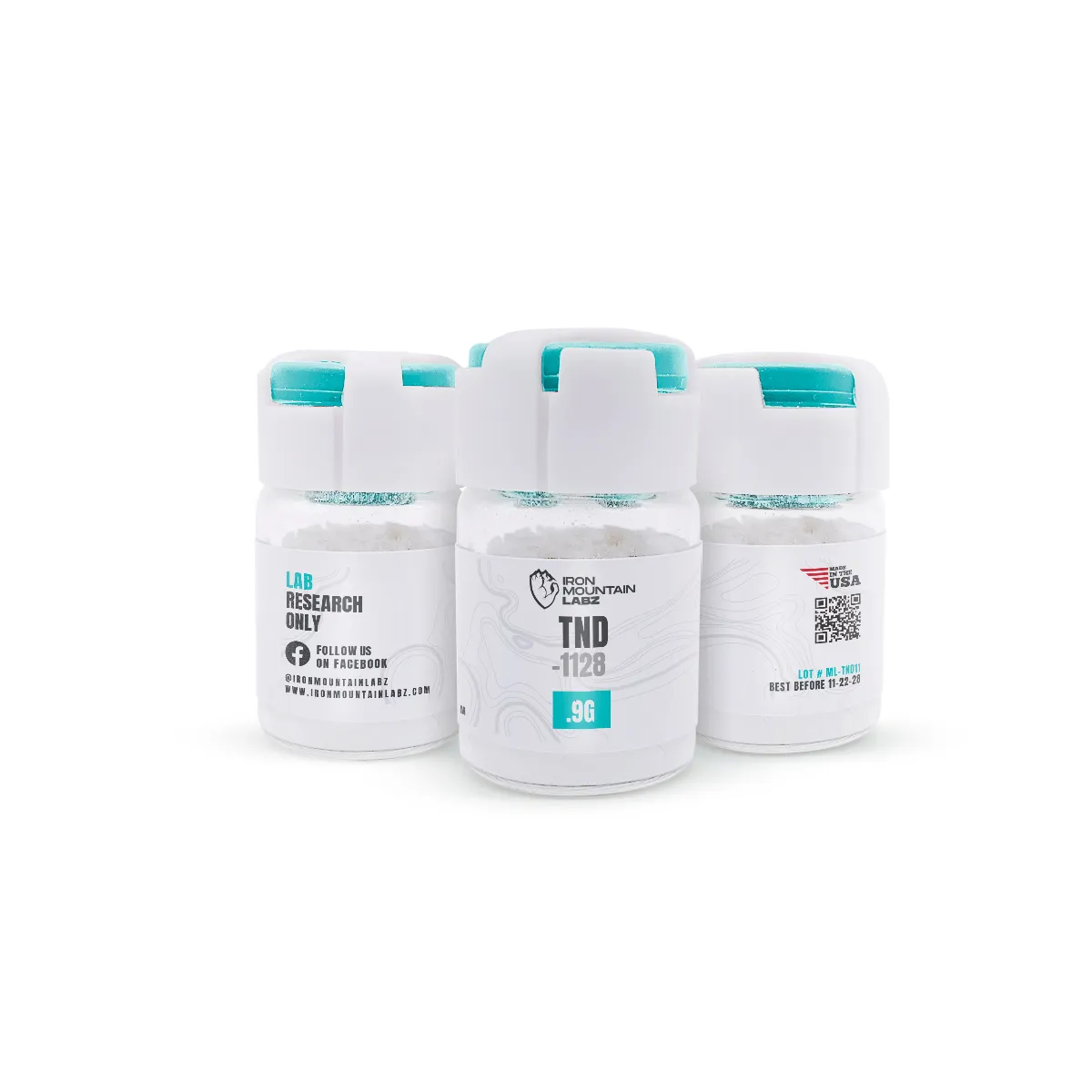
TND-1128 Research Overview
Disclaimer: The compounds described on this page are intended for laboratory research use only and are not approved for human consumption.
Overview of TND-1128
TND-1128 (CAS 59997-14-7) is a heterocyclic small molecule in the deazaflavin class – a synthetic analog of riboflavin (vitamin B2) in which the nitrogen atom at position 5 (N-5) of the isoalloxazine ring is replaced by a carbon atom, fundamentally altering the compound’s redox chemistry from flavin-type (one- or two-electron transfer) to obligate two-electron hydride transfer exclusively. It is classified as a nootropic and supplement ingredient research compound. It is not a SARM – it has no androgen receptor binding activity. It is not a peptide – it is a synthetic flavin analog heterocycle; the deazaflavin class (also known as 5-deazaflavins) is a family of synthetic heterocyclic coenzyme analogs with no amino acid chain.
Per the product catalogue, TND-1128 is classified as a NAD+ biosynthesis cofactor and antioxidant research compound. The deazaflavin structural class underpins coenzyme F420 – a low-potential hydride carrier (E°’ = −340 mV) found in methanogenic archaea and actinomycetes including Mycobacterium tuberculosis, where F420-dependent enzymes play central roles in central metabolic pathways and in the bioreductive activation of antitubercular prodrugs. TND-1128 belongs to this mechanistically significant chemical class.
Research transparency note: As of 2024, three peer-reviewed publications characterizing TND-1128 in mammalian brain preparations are available in PubMed (PMID 33989906, 36707184, 39608846), covering mitochondrial membrane potential, calcium homeostasis, and neuronal morphological development. The following overview and references relate to the deazaflavin compound class and NAD+ biosynthesis pathway research context relevant to TND-1128’s reported classification. This compound is supplied for researchers investigating deazaflavin chemistry, F420-dependent enzymology, and NAD+ pathway pharmacology in controlled laboratory settings.
This product is not approved by the FDA for any therapeutic indication, including ingestion, injection, or any form of administration for human use. It is intended for laboratory and research purposes only. It is not a dietary supplement or consumer product in this research-grade formulation. Restricted to qualified researchers and licensed laboratory institutions. IRB guidance is required for clinical research; IACUC compliance is required for preclinical animal research. Photosensitive compound – handle under reduced light; store in amber vials at −20°C.
Chemical Properties
| Section | Details |
| CAS Number | 59997-14-7 |
| Chemical Class | Heterocyclic Small Molecule (Deazaflavin) |
| Classification – NOT a SARM | No androgen receptor binding activity |
| Classification – NOT a Peptide | Synthetic flavin analog heterocycle; no amino acid chain |
| Regulatory Status | Research Compound, for laboratory use only. Not sold as a dietary supplement. |
| Molar Mass | 255.27 g/mol |
| Chemical Formula | C14H13N3O2 |
| IUPAC Name | 3-methyl-10-ethylpyrimido[4,5-b]quinoline-2,4(3H,10H)-dione |
| Synonyms | TND-1128; 5-deazaflavin analog; synthetic deazariboflavin; heterocyclic NAD+ cofactor analog; flavin-class antioxidant |
| Physical Form | Yellow to orange crystalline solid |
| Purity | ≥99% (HPLC-UV) |
| Solubility | DMSO: soluble; ethanol: soluble with warming; water: sparingly soluble |
| Storage | −20°C; amber-capped vials; sealed; protect from light – deazaflavin chromophore absorbs at ~420 nm |
| Shelf Life | 24 months from manufacture date under recommended conditions |
| Classification | Research Use Only (RUO) |
TND-1128’s Mechanism of Action in Research Models
Within deazaflavin biochemistry research, the defining mechanistic property of TND-1128 as a 5-deazaflavin is its obligate two-electron (hydride, H⁻) redox chemistry. In natural riboflavin/FMN/FAD, the N-5 nitrogen lone pair is essential for stabilizing the one-electron flavin semiquinone radical (FMNH•) as a kinetically accessible intermediate, enabling both one-electron and two-electron flavin-dependent chemistry in flavoenzymes. In 5-deazaflavins, the C-5 carbon substitution eliminates this lone pair, raising the energy of the radical state to prohibitive levels – constraining the compound exclusively to two-electron (hydride) transfer chemistry. This fundamental mechanistic distinction makes deazaflavins valuable pharmacological probes for distinguishing one-electron from two-electron flavoenzyme reaction mechanisms.
Based on articles retrieved from PubMed, Nguyen et al. (2017) described the discovery, structural characterization (X-ray crystal structure at 1.5 Å resolution), and biochemical characterization of F420-dependent glucose-6-phosphate dehydrogenase (FGD) from Rhodococcus jostii RHA1 – demonstrating the conserved active-site architecture of the deazaflavin cofactor binding pocket and establishing the enzymatic role of reduced F420H₂ as the hydride donor for numerous F420H₂-dependent reductases, including those involved in the bioreductive activation of antitubercular prodrugs pretomanid and delamanid (DOI). In the NAD+ pathway context, Khaidizar et al. (2021) reviewed NAMPT (nicotinamide phosphoribosyltransferase) as the rate-limiting enzyme of the NAD+ salvage pathway – the dominant NAD+ biosynthesis route in most mammalian tissues – and characterized the research landscape for compounds targeting NAD+ level maintenance as a strategy to mitigate age-related physiological decline (DOI). Data remains limited, and findings are not consistent across all experimental model systems.
Risk & Handling
Risk Tier: LOW-MODERATE
TND-1128 is a synthetic deazaflavin heterocycle with no established mammalian toxicological profile at laboratory handling concentrations. Handle with standard organic compound precautions:
- Photosensitivity: Deazaflavin chromophore absorbs at ~420 nm – amber-capped vials mandatory for all storage and handling; work under reduced-light conditions; foil-wrap all solution storage containers after preparation
- Inhalation risk: Use a ventilated workspace or fume hood when handling fine powder; N95 respiratory protection recommended during weighing
- PPE: Nitrile gloves, lab coat, and safety eyewear for all handling operations
- Spill: Collect powder with a damp cloth; dispose per institutional chemical waste guidelines
- No human safety data established for this research-grade formulation. Contact help@ironmountainlabz.com for the Safety Data Sheet before initiating any handling.
Why Consider TND-1128 for Research?
- Purity: ≥99% by HPLC-UV per lot
- Identity: confirmed by ¹H-NMR and LC-MS/MS per lot
- Light-sensitive packaging: amber-capped vials; store at −20°C protected from light
- Residual solvents: ≤300 ppm by GC headspace per lot (ICH Q3C compliant)
- Certificate of Analysis available on request per lot
- For queries, complaints, or support, please contact help@ironmountainlabz.com
FAQs
Q1: What is TND-1128 chemically, and why is it not a SARM or peptide?
TND-1128 is a synthetic deazaflavin heterocyclic small molecule – specifically, a 5-deazaflavin analog in which the isoalloxazine ring N-5 position is replaced by carbon, constraining its redox chemistry to obligate hydride transfer. It contains no amino acids and has no peptide bonds, making it definitively not a peptide. It has no androgen receptor binding activity, making it definitively not a SARM. It belongs to the deazaflavin chemical class that underpins coenzyme F420 – a low-potential hydride carrier widely studied in microbial metabolism and NAD+ biosynthesis research.
Q2: Why does the absence of specific mammalian literature matter for research with TND-1128?
Three peer-reviewed primary papers now confirm TND-1128’s activity in mammalian brain preparations, covering mitochondrial membrane potential facilitation (PMID 39608846), calcium homeostasis regulation with β-NMN comparison (PMID 36707184), and hippocampal neuronal morphological development (PMID 33989906). Researchers should use these as validation anchors alongside appropriate positive and negative controls when designing experiments.
Q3: What research applications is the deazaflavin class relevant to?
In laboratory and preclinical research settings, deazaflavin-class compounds have been investigated in: F420-dependent oxidoreductase (FDO) enzyme biochemistry (including FGD, FDOR, and deazaflavoenzymes in actinomycetes and archaea); mechanistic probe studies to distinguish one-electron vs. two-electron flavoenzyme pathways; antitubercular drug activation research (bioreductive activation of pretomanid/delamanid by F420H₂-dependent enzymes); and NAD+ cofactor biology research relevant to NAMPT-dependent NAD+ salvage pathways. All applications in laboratory and preclinical contexts only.
Q4: What are the photosensitivity precautions for TND-1128?
The deazaflavin chromophore absorbs strongly at ~420 nm. Amber-capped vials are mandatory for storage and handling. Work under reduced-light conditions and avoid prolonged exposure to ambient or UV light. Foil-wrap all solution storage containers immediately after preparation. Prepare working solutions immediately before use where possible, as photodegradation can alter assay results.
Q5: What storage conditions are required for TND-1128?
Store at −20°C in amber-capped sealed vials protected from light, moisture, and temperature fluctuations (shelf life: 24 months). Prepare DMSO or ethanol stock solutions and divide into single-use aliquots where feasible to minimize repeated exposure to light during opening. No human safety data established for this research-grade formulation.
References
Three peer-reviewed primary papers characterizing TND-1128 in mammalian brain preparations are listed below, alongside deazaflavin class biochemistry references providing the mechanistic framework.
Katsurabayashi S, Oyabu K, Kubota K, Watanabe T, Nagamatsu T, Akaike N, Iwasaki K. The novel mitochondria activator, 10-ethyl-3-methylpyrimido[4,5-b]quinoline-2,4(3H,10H)-dione (TND1128), promotes the development of hippocampal neuronal morphology. Biochem Biophys Res Commun. 2021;560:146–151. PMID: 33989906.
https://pubmed.ncbi.nlm.nih.gov/33989906/
Takahashi N, Akaike N, Nagamatsu T, Uchino H, Kudo Y. Effects of TND1128 (a 5-deazaflavin derivative), with self-redox ability, as a mitochondria activator on the mouse brain slice and its comparison with β-NMN. J Pharmacol Sci. 2022;151(2):93–109. PMID: 36707184.
https://pubmed.ncbi.nlm.nih.gov/36707184/
Takahashi N, Nagamatsu T, Akaike N, Kudo Y. TND1128, a 5-deazaflavin derivative with auto-redox ability, facilitates polarization of mitochondrial membrane potential (ΔΨ) and on-demand ATP synthesis in mice brain slices. J Pharmacol Sci. 2024;156(4):218–229. PMID: 39608846.
https://pubmed.ncbi.nlm.nih.gov/39608846/
IML Affiliate Disclosure
Some links on IML may connect readers with third-party suppliers through affiliate arrangements. IML may receive compensation from qualifying transactions at no additional cost to the reader, but the third-party supplier remains responsible for the actual sale, fulfillment, and product documentation.