

Description
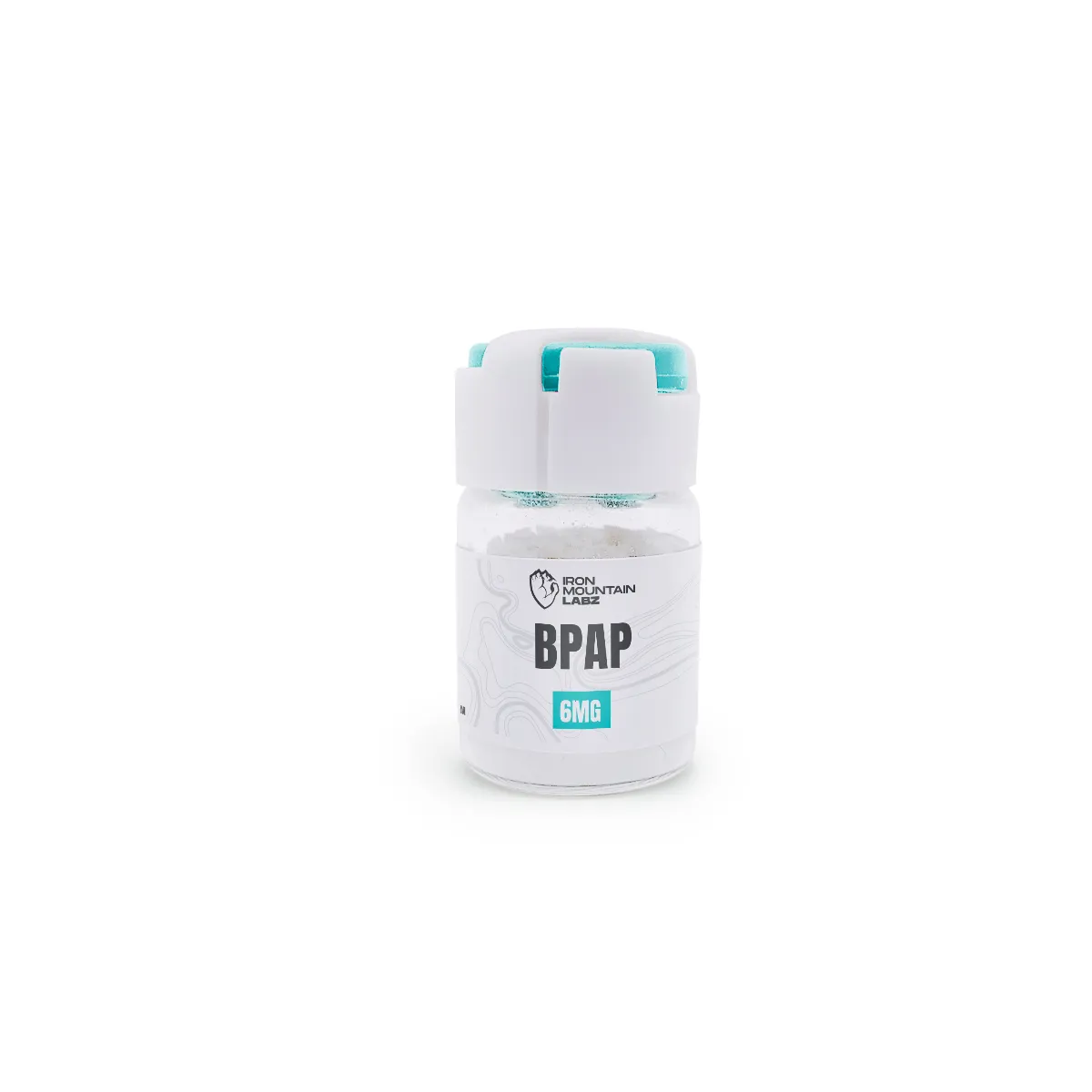
BPAP Research Overview
Disclaimer: The compounds described on this page are intended for laboratory research use only and are not approved for human consumption.
Overview of BPAP
BPAP – full chemical name (−)-1-(Benzofuran-2-yl)-2-propylaminopentane (CAS 260550-89-8 for the R-enantiomer free base) – is a benzofuran derivative small molecule classified as a nootropic research compound. Structurally, it features the bicyclic benzofuran aromatic ring system (benzene fused to furan) with a 2-propylaminopentane side chain at the C-2 position of the furan ring; the R-enantiomer is the pharmacologically active form. Free base MW: 245.36 g/mol (HCl salt: 281.82 g/mol); formula: C16H23NO (free base). BPAP is not a SARM – it has no androgen receptor binding activity; it acts as a monoaminergic activity enhancer via selective MAO-B inhibition and interaction with vesicular monoamine transporter 2 (VMAT2) and trace amine-associated receptor 1 (TAAR1). It is not a peptide – it is a single synthetic small molecule containing no amino acid chain.
BPAP was developed as a successor to (−)-deprenyl (selegiline) within the catecholaminergic activity enhancer (CAE) compound class, exhibiting approximately 100-fold greater potency as an activity enhancer in preclinical rodent brain preparations while maintaining MAO-B selectivity over MAO-A. Its research significance lies in its role as a highly selective, high-potency pharmacological probe for the CAE compound class.
This product is not approved by the FDA for any therapeutic indication, including ingestion, injection, or any form of administration for human use. It is intended for laboratory and research purposes only. It is not a dietary supplement or consumer product. Restricted to qualified researchers and licensed laboratory institutions. IRB guidance is required for clinical research; IACUC compliance is required for preclinical animal research. CNS-active benzofuran derivative – treat as pharmacologically active during all handling operations; avoid skin contact and inhalation.
Chemical Properties
| Section | Details |
| CAS Number | 260550-89-8 (R-enantiomer; (−)-BPAP free base) |
| Chemical Class | Benzofuran Derivative / Small Molecule |
| Classification – NOT a SARM | No androgen receptor activity; acts via MAO-B inhibition and VMAT2/TAAR1 interaction |
| Classification – NOT a Peptide | Single synthetic small molecule; no amino acid chain |
| Regulatory Status | Research Compound – Not FDA-Approved |
| Molar Mass | 245.36 g/mol (free base); 281.82 g/mol (HCl salt) |
| Chemical Formula | C16H23NO (free base) |
| IUPAC Name | (R)-N-propyl-1-(1-benzofuran-2-yl)pentan-2-amine |
| Synonyms | (−)-BPAP; R-BPAP; (2R)-1-(benzofuran-2-yl)-N-propylpentan-2-amine; BPAP HCl; catecholaminergic activity enhancer BPAP |
| PubChem CID | 9859674 (racemic BPAP; ChemSpider ID 7992053 also confirmed; R-enantiomer characterized separately in primary pharmacology literature) |
| Physical Form | White to off-white crystalline solid (HCl salt) |
| Purity | ≥99% (HPLC-UV); ≥99% ee – R-enantiomer confirmed by chiral HPLC |
| Solubility | Water: ≥10 mg/mL (as HCl salt); DMSO: freely soluble; ethanol: soluble |
| Storage | −20°C; sealed container; protect from light and moisture; handle in ventilated area – CNS-active amine |
| Shelf Life | 24 months from manufacture date under recommended conditions |
| Classification | Research Use Only (RUO) |
BPAP’s Mechanism of Action in Research Models
Within monoamine oxidase pharmacology research, BPAP has been characterized as a selective inhibitor of monoamine oxidase B (MAO-B; EC 1.4.3.4) – the outer mitochondrial membrane flavoenzyme that catalyzes oxidative deamination of dopamine, β-phenylethylamine (PEA), and benzylamine as preferred substrates. Mechanistically, BPAP interacts with the hydrophobic substrate-binding cavity (~700 ų) adjacent to the FAD cofactor in the active site of MAO-B, inhibiting the reductive half-reaction in which the substrate’s amine nitrogen attacks FAD N5 to form the covalent flavin-substrate adduct. Selectivity for MAO-B over MAO-A in preclinical biochemical assay systems is attributed to steric complementarity with the larger, bipartite MAO-B substrate cavity, which accommodates bulkier substrates than the smaller, unitary MAO-A active site.
Youdim et al. (2006) reviewed the therapeutic potential of MAO inhibitors in Nature Reviews Neuroscience, characterizing the structure-function relationships of selective MAO-B inhibitors including selegiline – the reference compound for the CAE class from which BPAP was derived – and contextualizing MAO-B inhibition within the broader framework of dopaminergic neuroprotection research (DOI). In the CAE compound class context, Knoll et al. (2017) demonstrated in a rat longevity study that BPAP (0.0001–0.05 mg/kg) significantly reduced tumor manifestation rates in a preclinical rodent fibromyxosarcoma model and characterized BPAP’s mechanism of action as operating primarily through interaction with vesicular monoamine transporter 2 (VMAT2) – clarifying the characteristic bimodal, bell-shaped concentration-effect curves of the CAE substance class (DOI). Data remains limited, and findings are not consistent across all model systems.
Beyond MAO-B inhibition, the primary mechanism of BPAP’s activity-enhancing property at femtomolar-picomolar concentrations in preclinical models operates via TAAR1 (trace amine-associated receptor 1) activation and VMAT2 (vesicular monoamine transporter 2) potentiation – distinct from and more potent than its MAO-B inhibitory activity, which predominates at nanomolar-micromolar concentrations.
Risk & Handling
Risk Tier: LOW-MODERATE
BPAP is a CNS-active benzofuran derivative. No established acute human toxicity data exist at laboratory handling concentrations. Handle as a pharmacologically active compound throughout all operations:
- CNS activity: Avoid skin contact and inhalation – risk of systemic absorption through skin or mucosal routes
- Ventilation: Work in a ventilated area or under a fume hood when handling powder form
- HCl salt form: Mildly acidic in aqueous solution – avoid contact with eyes; flush immediately with water if contact occurs
- Chiral purity: Only the (−)R-enantiomer is pharmacologically active; confirm ≥99% ee on the COA before use in quantitative assays
- PPE: Nitrile gloves, lab coat, and safety eyewear for all handling operations
- Regulatory: Not DEA-scheduled; verify applicable local regulations before procurement
- No human safety data established for this research-grade formulation. Contact help@ironmountainlabz.com for the Safety Data Sheet.
Why Consider BPAP for Research?
- Purity: ≥99% by HPLC-UV per lot
- Chiral purity: ≥99% ee for the (−)R-enantiomer by chiral HPLC per lot
- Identity: confirmed by ¹H-NMR and LC-MS/MS per lot
- Residual solvents: ≤300 ppm by GC headspace per lot (ICH Q3C compliant)
- Endotoxin: ≤1.0 EU/mg (LAL gel-clot method)
- Certificate of Analysis available on request per lot
- For queries, complaints, or support, please contact help@ironmountainlabz.com
FAQs
Q1: What is BPAP chemically, and why is it classified as a nootropic research compound rather than a SARM or peptide?
BPAP is a benzofuran derivative small molecule – a single synthetic organic compound built around the bicyclic benzofuran ring system. It contains zero amino acids and has no peptide bonds, making it definitively not a peptide. It acts via MAO-B inhibition and VMAT2/TAAR1 interaction – not at androgen receptors – making it definitively not a SARM. Its nootropic classification reflects its investigation in dopaminergic and serotonergic neurotransmitter system research as a catecholaminergic activity enhancer.
Q2: What is the regulatory status of BPAP in the United States?
BPAP is not approved by the FDA for any human therapeutic application. It is not DEA-scheduled. It is supplied as a research-grade benzofuran derivative for laboratory use only. Restricted to qualified researchers and licensed laboratory institutions.
Q3: How does BPAP compare to selegiline ((−)-deprenyl) in preclinical research models?
Both BPAP and (−)-deprenyl belong to the catecholaminergic activity enhancer (CAE) compound class and exhibit selective MAO-B inhibition. BPAP has been characterized at approximately 100-fold greater potency than (−)-deprenyl as an activity enhancer in rodent brain preparations, while maintaining MAO-B selectivity over MAO-A. These comparisons derive from preclinical laboratory studies and are not predictive of human responses.
Q4: Why is chiral purity critical for BPAP research applications? The (−)R-enantiomer is the pharmacologically active form in preclinical models; the (+)S-enantiomer shows markedly reduced MAO-B inhibitory and activity-enhancing potency. The linked vendor supplies BPAP at ≥99% ee for the R-enantiomer. Researchers should verify enantiomeric purity on the COA before use in any quantitative pharmacological assay.
Q5: What safety precautions apply to BPAP handling in a research laboratory?
BPAP is a CNS-active benzofuran-derived amine – avoid skin contact and inhalation in all handling operations. Handle in a ventilated area or fume hood when working with powder. Nitrile gloves, lab coat, and safety eyewear are mandatory. The HCl salt form is mildly acidic – flush eyes with water immediately if contact occurs. No human safety data has been established for this research-grade formulation. Contact help@ironmountainlabz.com for the full Safety Data Sheet.
References
- Youdim MB, Edmondson D, Tipton KF. The therapeutic potential of monoamine oxidase inhibitors. Nat Rev Neurosci. 2006;7(4):295–309. PMID: 16552415.
https://pubmed.ncbi.nlm.nih.gov/16552415/ - Knoll J, Baghy K, Eckhardt S, et al. A longevity study with enhancer substances (selegiline, BPAP) detected an unknown tumor-manifestation-suppressing regulation in rat brain. Life Sci. 2017;182:57–64. PMID: 28623006.
https://doi.org/10.1016/j.lfs.2017.06.010 - Harsing LG Jr, Knoll J, Miklya I. Enhancer regulation of dopaminergic neurochemical transmission in the striatum. International Journal of Molecular Sciences. 2022;23(15):8543. PMID: 35955676https://pubmed.ncbi.nlm.nih.gov/35955676/
IML Affiliate Disclosure
Some links on IML may connect readers with third-party suppliers through affiliate arrangements. IML may receive compensation from qualifying transactions at no additional cost to the reader, but the third-party supplier remains responsible for the actual sale, fulfillment, and product documentation.