

Description
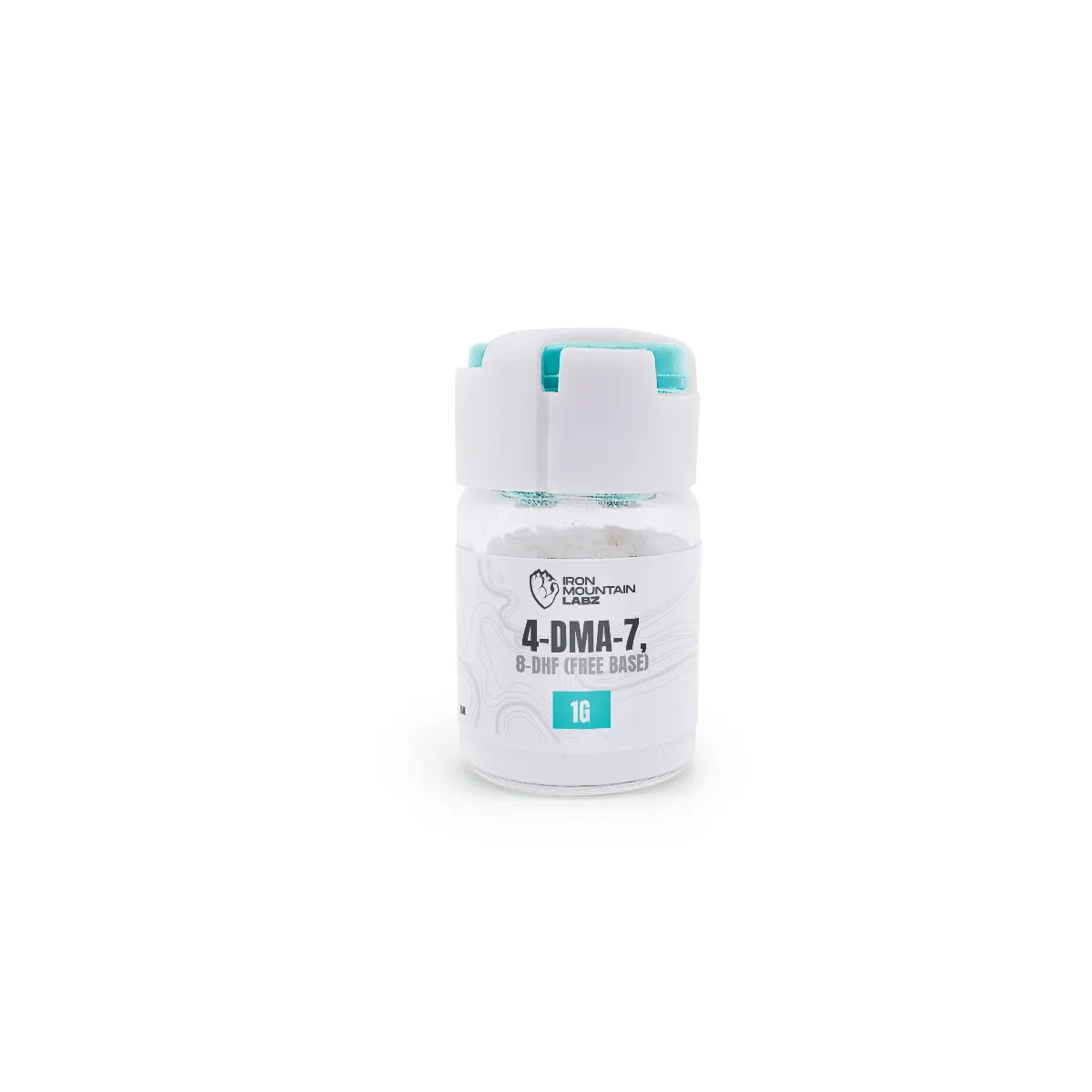
4-DMA-7,8-DHF (Free Base) Research Overview
Disclaimer: The compounds described on this page are intended for laboratory research use only and are not approved for human consumption.
Overview of 4-DMA-7,8-DHF (Free Base)
4-DMA-7,8-DHF (4′-dimethylamino-7,8-dihydroxyflavone; CAS 1205548-04-4) is a synthetic flavonoid derivative – a compound built on the flavone (2-phenyl-4H-chromen-4-one) scaffold, a structural class found throughout the plant kingdom. Molecular formula: C17H15NO4; MW: 297.31 g/mol, PUBChem ID 44610701. It is classified as a nootropic research compound. It is not a SARM – it activates TrkB (NTRK2; tropomyosin receptor kinase B), the high-affinity receptor for brain-derived neurotrophic factor (BDNF), not androgen receptors. It is not a peptide – it is a synthetic flavonoid small molecule with no amino acid chain; the flavonoid class is a plant-derived polyphenol chemical family.
The 4′-dimethylamino substituent on the B-ring phenyl group – the key structural modification from the parent compound 7,8-dihydroxyflavone (7,8-DHF) – was designed to enhance TrkB receptor binding affinity by better mimicking the loop 2 region of BDNF that contacts the TrkB extracellular domain. This modification positions 4-DMA-7,8-DHF as a higher-potency BDNF-mimetic research tool compared to the parent 7,8-DHF scaffold, enabling pharmacological investigation of the TrkB/BDNF neurotrophin signaling axis in neuroplasticity, neuroprotection, and cognitive neuroscience research models without the pharmacokinetic limitations of the BDNF protein itself.
This product is not approved by the FDA for any therapeutic indication, including ingestion, injection, or any form of administration for human use. It is intended for laboratory and research purposes only. It is not a dietary supplement or consumer product. Restricted to qualified researchers and licensed laboratory institutions. IRB guidance is required for clinical research; IACUC compliance is required for preclinical animal research. Photosensitive compound – handle under reduced light; store in amber vials at −20°C.
Chemical Properties
| Section | Details |
| CAS Number | 1205548-04-4 (free base); 1205548-00-0 (hydrobromide salt) — verify against batch COA |
| Chemical Class | Synthetic Flavonoid Derivative |
| Classification – NOT a SARM | Activates TrkB (BDNF receptor), not androgen receptors; mimics BDNF neurotrophin signaling |
| Classification – NOT a Peptide | Synthetic flavonoid small molecule; plant-derived chemical class; no amino acid chain |
| Regulatory Status | Research Compound – Not FDA-Approved |
| Molar Mass | 297.31 g/mol |
| Chemical Formula | C17H15NO4 |
| IUPAC Name | 2-[4-(dimethylamino)phenyl]-7,8-dihydroxy-4H-chromen-4-one |
| Synonyms | 4-DMA-7,8-DHF; 4′-dimethylamino-7,8-dihydroxyflavone; dimethylaminodihydroxyflavone; TrkB agonist flavonoid |
| PubChem CID | 44610701 |
| Physical Form | Yellow to orange crystalline powder |
| Purity | ≥99% (HPLC-UV) |
| Solubility | DMSO: ≥10 mg/mL; ethanol: soluble with warming; water: sparingly soluble |
| Storage | −20°C; amber-capped vials; protect from light – photosensitive catechol/flavone chromophore; store sealed and dry |
| Shelf Life | 24 months from manufacture date under recommended conditions |
| Classification | Research Use Only (RUO) |
4-DMA-7,8-DHF’s Mechanism of Action in Research Models
Within neurotrophin receptor pharmacology research, 4-DMA-7,8-DHF has been characterized as a selective small-molecule TrkB agonist. TrkB (NTRK2) is a single-pass transmembrane receptor tyrosine kinase (RTK) that undergoes ligand-induced homodimerization followed by transautophosphorylation at key tyrosine residues: Tyr490 in the juxtamembrane region (Shc docking site → Ras-Raf-MEK-ERK cascade); Tyr670, Tyr674, Tyr675 in the activation loop of the kinase domain; and Tyr785 (PLCγ1 docking site → PKC/IP3/Ca²⁺ mobilization). Simultaneously, PI3K is recruited via IRS-1 and p85 adaptor to drive the Akt-mTOR pro-survival axis. Together, these pathways converge on CREB phosphorylation at Ser133, driving transcription of neurotrophic genes including BDNF itself, Bcl-2, and synaptic plasticity regulators.
Jang et al. (2010) identified 7,8-dihydroxyflavone as the first small-molecule TrkB agonist with high-affinity binding, demonstrating TrkB dimerization, autophosphorylation, and activation of downstream signaling cascades – and confirming TrkB-dependent neuroprotection in kainate toxicity, stroke, and a Parkinson disease mouse model (DOI). In further characterization of the 7,8-DHF chemotype relevant to 4-DMA-7,8-DHF, Bernard-Gauthier et al. (2013) demonstrated by in vitro autoradiography that 4-DMA-based 7,8-dihydroxyflavone radioligands showed high specific binding in the rat brain cortex, striatum, hippocampus, and thalamus – with blockade by both 7,8-DHF and BDNF confirming direct binding at the TrkB extracellular domain rather than an indirect allosteric mechanism (DOI). Data remains limited, and findings are not consistent across all experimental model systems.
Risk & Handling
Risk Tier: MODERATE
4-DMA-7,8-DHF is a CNS-active synthetic flavonoid TrkB agonist. Handle as a pharmacologically active compound:
- Photosensitivity: The catechol (dihydroxy) moiety and extended flavone chromophore degrade on exposure to UV and visible light – amber-capped vials are mandatory; work under reduced-light conditions; foil-wrap all solution storage tubes
- DMSO vehicle: Chemical-resistant gloves required – DMSO is a penetration enhancer; avoid all skin contact with DMSO solutions
- CNS activity: Avoid powder inhalation and skin contact
- Catechol oxidation: Prepare solutions fresh where possible; catechol groups are susceptible to oxidation – keep solutions sealed under N₂ when preparing for extended assay periods
- PPE: Nitrile gloves, lab coat, and safety eyewear for all handling operations
- No human safety data established for this research-grade formulation. Contact help@ironmountainlabz.com for the Safety Data Sheet.
Why Consider 4-DMA-7,8-DHF for Research?
- Purity: ≥99% by HPLC-UV per lot
- Identity: confirmed by ¹H-NMR and LC-MS/MS per lot
- Light-sensitive packaging: amber-capped vials included; store at −20°C protected from light
- Residual solvents: ≤300 ppm by GC headspace per lot (ICH Q3C compliant)
- Endotoxin: ≤1.0 EU/mg (LAL gel-clot method)
- Certificate of Analysis available on request per lot
- For queries, complaints, or support, please contact help@ironmountainlabz.com
FAQs
Q1: What is 4-DMA-7,8-DHF chemically, and why is it not a SARM or peptide?
4-DMA-7,8-DHF is a synthetic flavonoid derivative – a small molecule built on the flavone scaffold (2-phenyl-4H-chromen-4-one) with a 4′-dimethylamino group on the B-ring and catechol hydroxyls at the 7,8-positions of the A-ring. It contains no amino acids and has no peptide bonds, making it definitively not a peptide. It activates TrkB (BDNF receptor tyrosine kinase) – not androgen receptors – making it definitively not a SARM. It mimics BDNF neurotrophin signaling through direct binding at the TrkB extracellular domain.
Q2: How does 4-DMA-7,8-DHF relate to the parent compound 7,8-DHF in research?
7,8-DHF (7,8-dihydroxyflavone) was identified in 2010 as the first small-molecule TrkB agonist (Jang et al. 2010, PNAS). 4-DMA-7,8-DHF adds a 4′-dimethylamino group to the B-ring, which was designed to enhance TrkB binding affinity by more closely mimicking the BDNF loop 2 contact region. Bernard-Gauthier et al. (2013) confirmed that 4-DMA-based 7,8-dihydroxyflavone congeners bind directly at the TrkB extracellular domain in autoradiographic assays with high regional specificity in rat brain tissue.
Q3: What research applications has this compound been investigated in?
In preclinical and in vitro laboratory settings: TrkB receptor binding and phosphorylation assays, BDNF-mimetic activity characterization, neuronal survival and neuroprotection studies in cell culture (kainate toxicity, oxidative stress models), synaptic plasticity and cognitive function research in rodent models, and TrkB radioligand development for PET neuroimaging research. All in laboratory and preclinical contexts only.
Q4: Why is photosensitivity a concern for 4-DMA-7,8-DHF?
The catechol (7,8-dihydroxy) moiety is susceptible to photo-oxidation and auto-oxidation under ambient light, generating ortho-quinone degradation products that may interfere with biological assays. The extended conjugated flavone chromophore also absorbs significantly in the UV-visible range. Always use amber-capped vials for storage and handling, work under reduced-light conditions, and prepare solutions immediately before use where feasible.
Q5: What storage conditions are required for 4-DMA-7,8-DHF?
Store at −20°C in amber-capped sealed vials protected from light, moisture, and oxygen (shelf life: 24 months). Prepare DMSO stock solutions (≥10 mg/mL) and dilute into cell culture medium immediately before assay. Final DMSO concentration should not exceed 0.1% v/v in cell-based assays. Do not repeatedly freeze-thaw. No human safety data established for this research-grade formulation.
References
- Jang SW, Liu X, Yepes M, et al. A selective TrkB agonist with potent neurotrophic activities by 7,8-dihydroxyflavone. Proc Natl Acad Sci USA. 2010;107(6):2687–2692. PMID: 20133810.
https://pubmed.ncbi.nlm.nih.gov/20133810/ - Bernard-Gauthier V, Boudjemeline M, Rosa-Neto P, Thiel A, Schirrmacher R. Towards tropomyosin-related kinase B (TrkB) receptor ligands for brain imaging with PET: radiosynthesis and evaluation of [18F] and [11C]-labelled 7,8-dihydroxyflavone derivatives. Bioorg Med Chem. 2013;21(24):7816–7829. PMID: 24183588.
https://pubmed.ncbi.nlm.nih.gov/24183588/ - Liu C, Chan CB, Ye K. 7,8-dihydroxyflavone, a small molecular TrkB agonist, is useful for treating various BDNF-implicated human disorders. Translational Neurodegeneration. 2016;5:1. PMID: 26740873 https://pubmed.ncbi.nlm.nih.gov/26740873/
IML Affiliate Disclosure
Some links on IML may connect readers with third-party suppliers through affiliate arrangements. IML may receive compensation from qualifying transactions at no additional cost to the reader, but the third-party supplier remains responsible for the actual sale, fulfillment, and product documentation.