

Description
Urolithin B Powder Research Overview
Disclaimer: The compounds described on this page are intended for laboratory research use only and are not approved for human consumption.
Overview of Urolithin B Powder
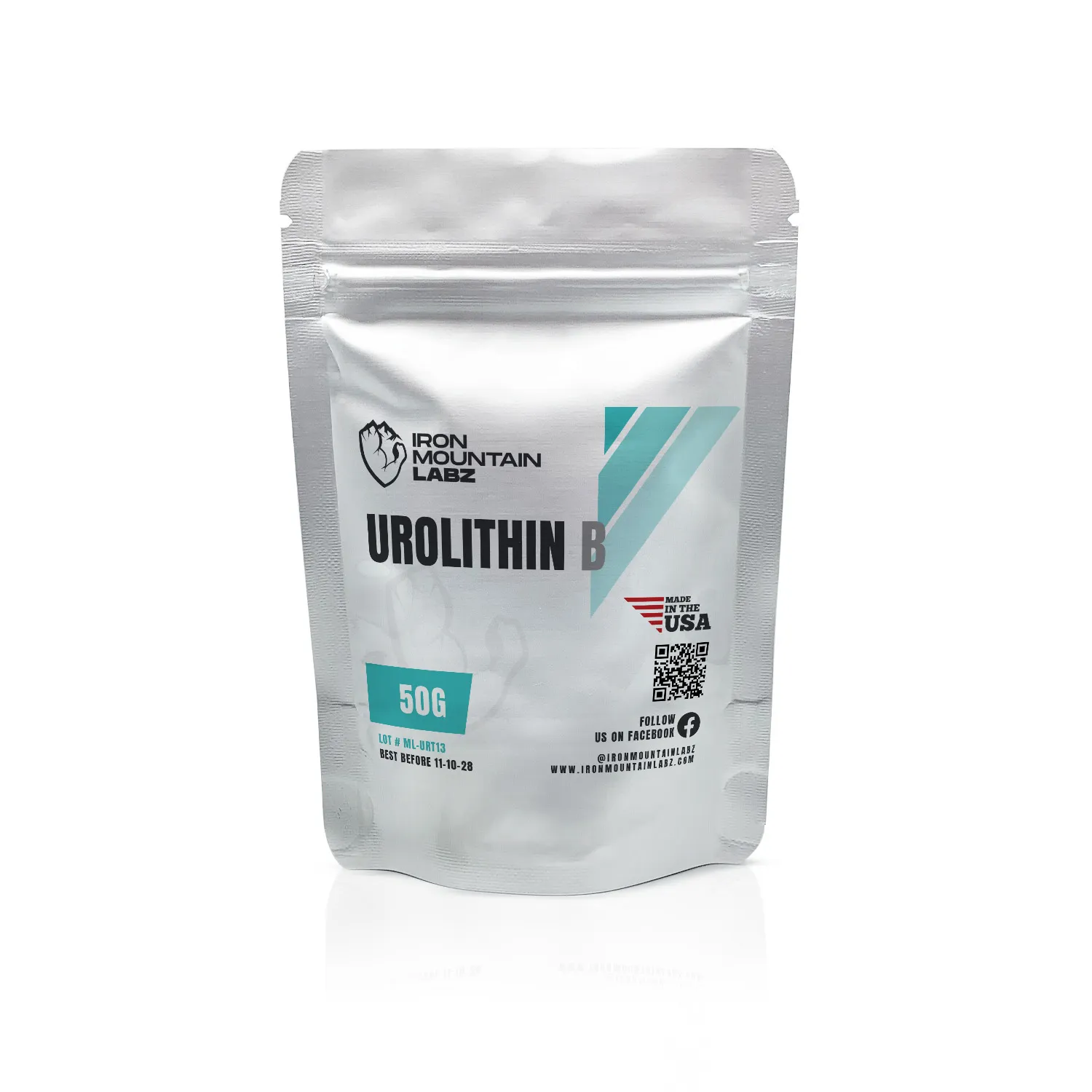
Urolithin B (UB; CAS 1139-83-9) is a polyphenol metabolite (postbiotic) – a naturally occurring benzo[c]chromenone compound produced by the gut microbial transformation of ellagitannins, the same precursor pathway that generates Urolithin A. Molecular formula: C13H8O3; MW: 212.20 g/mol; PubChem CID: 5380406; IUPAC: 3-hydroxy-6H-benzo[c]chromen-6-one. It is classified as a supplement and emerging research compound. It is not a peptide – it is a polyphenol postbiotic; a gut microbial metabolite containing zero amino acids.
On the SARM question: Per the product catalogue and current research literature, mild androgen receptor (AR) interaction for Urolithin B is being actively studied in preclinical muscle biology and cancer cell research contexts – but UB is not currently classified as a SARM. It lacks the selectivity, binding affinity, and pharmacokinetic profile of pharmaceutical SARMs. Researchers specifically investigating the nature and extent of this AR interaction are the intended users for this product.
Structurally, Urolithin B differs from Urolithin A by the absence of the 8-position hydroxyl group – retaining only the 3-OH substituent on the dibenzopyranone scaffold. This structural difference results in reduced mitophagy-inducing potency compared to UA, while UB maintains other biological activities in preclinical cell models including anti-inflammatory and antiproliferative activity.
This product is not approved by the FDA for any therapeutic indication, including ingestion, injection, or any form of administration for human use. It is intended for laboratory and research purposes only. Not a dietary supplement or consumer product in this research-grade formulation. Restricted to qualified researchers and licensed laboratory institutions. IRB guidance is required for clinical research; IACUC compliance is required for preclinical animal research.
Chemical Properties
| Section | Details |
| CAS Number | 1139-83-9 |
| Chemical Class | Polyphenol Metabolite (Postbiotic) |
| Classification – NOT a SARM | Mild AR interaction under active preclinical investigation; NOT currently classified as a SARM – lacks SARM-level selectivity, binding affinity, and pharmacokinetic profile |
| Classification – NOT a Peptide | Polyphenol postbiotic; structural isomer of Urolithin A; contains zero amino acids |
| Regulatory Status | Research Compound / Emerging Supplement ingredient |
| Molar Mass | 212.20 g/mol |
| Chemical Formula | C13H8O3 |
| IUPAC Name | 3-hydroxy-6H-benzo[c]chromen-6-one |
| Synonyms | Urolithin B; UB; 3-hydroxydibenzo[b,d]pyran-6-one; ellagitannin gut metabolite; pomegranate-derived postbiotic |
| PubChem CID | 5380406 |
| Physical Form | White to pale yellow crystalline powder |
| Purity | ≥99% (HPLC-UV) |
| Solubility | DMSO: ≥10 mg/mL; ethanol: soluble; water: sparingly soluble (<0.1 mg/mL) |
| Storage | −20°C; sealed; protect from light and moisture |
| Shelf Life | 24 months from manufacture date under recommended conditions |
| Classification | Research Use Only (RUO) |
Urolithin B Powder’s Mechanism of Action in Research Models
Within polyphenol postbiotic biology research, Urolithin B has been investigated across several mechanistic domains in preclinical laboratory model systems. In cancer cell biology and anti-inflammatory research, UB has been studied for its capacity to modulate multiple signaling pathways: NF-κB pathway inhibition (reducing phospho-IκBα Ser32/Ser36 and downstream target gene expression including TNF-α, IL-6, and COX-2); MAPK pathway modulation (ERK1/2, p38); and MDM2-p53 interaction disruption in cancer cell model systems. UB has also been investigated for antiproliferative activity in cancer cell lines via cell cycle arrest and caspase-mediated apoptosis induction.
In the context of the androgen receptor (AR) interaction question central to this compound’s research interest, in vitro reporter gene assays using AR-positive cell lines have detected partial AR agonist or modulator activity for Urolithin B at pharmacological concentrations in preclinical settings. This activity has not been characterized with sufficient specificity, binding affinity data, or selectivity profiling to qualify UB as a SARM under current pharmacological definitions. It remains an active area of preclinical characterization.
Hasheminezhad et al. (2021) reviewed the mechanistic basis of urolithin biological activities comprehensively in Phytotherapy Research – characterizing NF-κB pathway suppression, MAPK modulation, MDM2-p53 interaction, mitophagy induction, and mitochondrial biogenesis as core mechanisms for the urolithin class, with UA receiving the most in-depth treatment for mitophagy while UB shares the class’s anti-inflammatory and antiproliferative signaling properties (DOI). Alami et al. (2026) reviewed the neuroprotective mechanisms of gut microbiota-derived urolithins specifically in Alzheimer’s disease contexts, characterizing urolithins’ capacity to cross the blood-brain barrier and modulate tau-mediated axonal degeneration, microglial activation, redox imbalance, and impaired mitophagy in cellular and animal models – noting urolithins as positioned at the intersection of nutrition, microbiota, and neurodegeneration (DOI). Data remains limited, and findings are not consistent across all experimental model systems.
Risk & Handling
Risk Tier: LOW-MODERATE
Urolithin B is a naturally occurring polyphenol postbiotic. No significant acute human toxicity at laboratory handling concentrations. The low-moderate tier reflects the incompletely characterized AR interaction under active investigation:
- AR interaction caution: Given the actively investigated AR-modulatory activity, researchers should apply pharmacologically active compound precautions – avoid skin contact and inhalation; handle with appropriate controls in endocrine biology assays
- DMSO solutions: Standard DMSO skin contact precautions – nitrile gloves required
- PPE: Nitrile gloves, lab coat, and safety eyewear for all handling operations
- Glucuronidation: In cell models expressing UGT enzymes (e.g., Caco-2), urolithins are rapidly glucuronidated – use appropriate metabolic controls when designing cell-based assays with UB
- No human safety data established for this research-grade formulation. Contact help@ironmountainlabz.com for the Safety Data Sheet.
Why Consider Urolithin B Powder for Research?
- Purity: ≥99% by HPLC-UV per lot
- Identity: confirmed by ¹H-NMR and LC-MS/MS per lot
- Residual solvents: ≤300 ppm by GC headspace per lot (ICH Q3C compliant)
- Endotoxin: ≤1.0 EU/mg (LAL gel-clot method)
- Certificate of Analysis available on request per lot
- For queries, complaints, or support, please contact help@ironmountainlabz.com
FAQs
Q1: What is Urolithin B chemically, and why is it not classified as a SARM despite ongoing AR research?
Urolithin B is a polyphenol metabolite (postbiotic) – a gut microbial benzo[c]chromenone compound from ellagitannin fermentation. It contains zero amino acids, making it definitively not a peptide. While mild AR interaction is under active preclinical investigation, UB is not classified as a SARM because it lacks the pharmacological selectivity ratio, binding affinity, and tissue-specific pharmacokinetic profile that defines the SARM compound class. It is not designed as an androgen receptor ligand; the observed partial activity in reporter assays requires further characterization.
Q2: How does Urolithin B differ from Urolithin A structurally and mechanistically?
Urolithin B (3-OH; CAS 1139-83-9) lacks the 8-position hydroxyl group present in Urolithin A (3,8-diOH; CAS 1143-70-0). Both are produced via the same gut microbial ellagitannin fermentation pathway from pomegranate and related foods. UA demonstrates significantly greater mitophagy-inducing potency in preclinical cell models, attributed to the 8-OH group. UB retains anti-inflammatory, NF-κB inhibitory, and antiproliferative activities, and is additionally being investigated for AR interaction – making it an interesting research comparator to UA in structure-activity relationship studies.
Q3: What preclinical research applications has Urolithin B been investigated in?
In preclinical in vitro laboratory settings: NF-κB pathway inhibition and anti-inflammatory signaling assays, antiproliferative and cell cycle arrest studies in cancer cell lines (prostate, colon, breast cancer cell models), AR reporter gene assays in androgen-sensitive cell lines, comparative mitophagy assays alongside UA, and neuroinflammation research models. All in laboratory and preclinical contexts only.
Q4: What experimental controls are needed for Urolithin B AR interaction studies?
Researchers should include: (1) DHT (dihydrotestosterone) as the AR agonist positive control; (2) enzalutamide or bicalutamide as AR antagonist reference; (3) AR-negative cell line as a negative control; (4) established SARMs (e.g., RAD140, LGD-4033) as positive pharmacological benchmarks for comparison. Glucuronidation controls are particularly important in cell models expressing UGT enzymes – note that Caco-2 cells rapidly glucuronidate urolithins, potentially confounding activity measurements.
Q5: What storage and handling precautions apply to Urolithin B?
Store at −20°C in a sealed container protected from light and moisture (shelf life: 24 months). Prepare DMSO stock solutions (≥10 mg/mL) and dilute to ≤0.1% v/v final in cell culture medium. No repeated freeze-thaw cycles. Given the under-investigation AR interaction, apply pharmacologically active compound precautions – nitrile gloves, lab coat, and safety eyewear mandatory; avoid skin contact. No human safety data established for this research-grade formulation.
References
-
- Hasheminezhad SH, Boozari M, Iranshahi M, et al. A mechanistic insight into the biological activities of urolithins as gut microbial metabolites of ellagitannins. Phytother Res. 2022;36(1):112–146. PMID: 34542202.
https://pubmed.ncbi.nlm.nih.gov/34542202/ - Alami M, Berrougui H, Morvaridzadeh M, et al. Mechanistic insights into the neuroprotective potential of gut microbiota-derived urolithins in Alzheimer’s disease. Mech Ageing Dev. 2026;231:112189. PMID: 42082056.
https://pubmed.ncbi.nlm.nih.gov/42082056/ - Savi M, Bocchi L, Mena P, et al. In vivo administration of urolithin A and B prevents the occurrence of cardiac dysfunction in streptozotocin-induced diabetic rats. Cardiovascular Diabetology. 2017;16(1):80. PMID: 28615026 https://pubmed.ncbi.nlm.nih.gov/28615026/
- Hasheminezhad SH, Boozari M, Iranshahi M, et al. A mechanistic insight into the biological activities of urolithins as gut microbial metabolites of ellagitannins. Phytother Res. 2022;36(1):112–146. PMID: 34542202.
IML Affiliate Disclosure
Some links on IML may connect readers with third-party suppliers through affiliate arrangements. IML may receive compensation from qualifying transactions at no additional cost to the reader, but the third-party supplier remains responsible for the actual sale, fulfillment, and product documentation.