

Description
Lipo-C (LC120) Research Overview
Disclaimer: The compounds described on this page are intended for laboratory research use only and are not approved for human consumption.
Overview of Lipo-C (LC120)
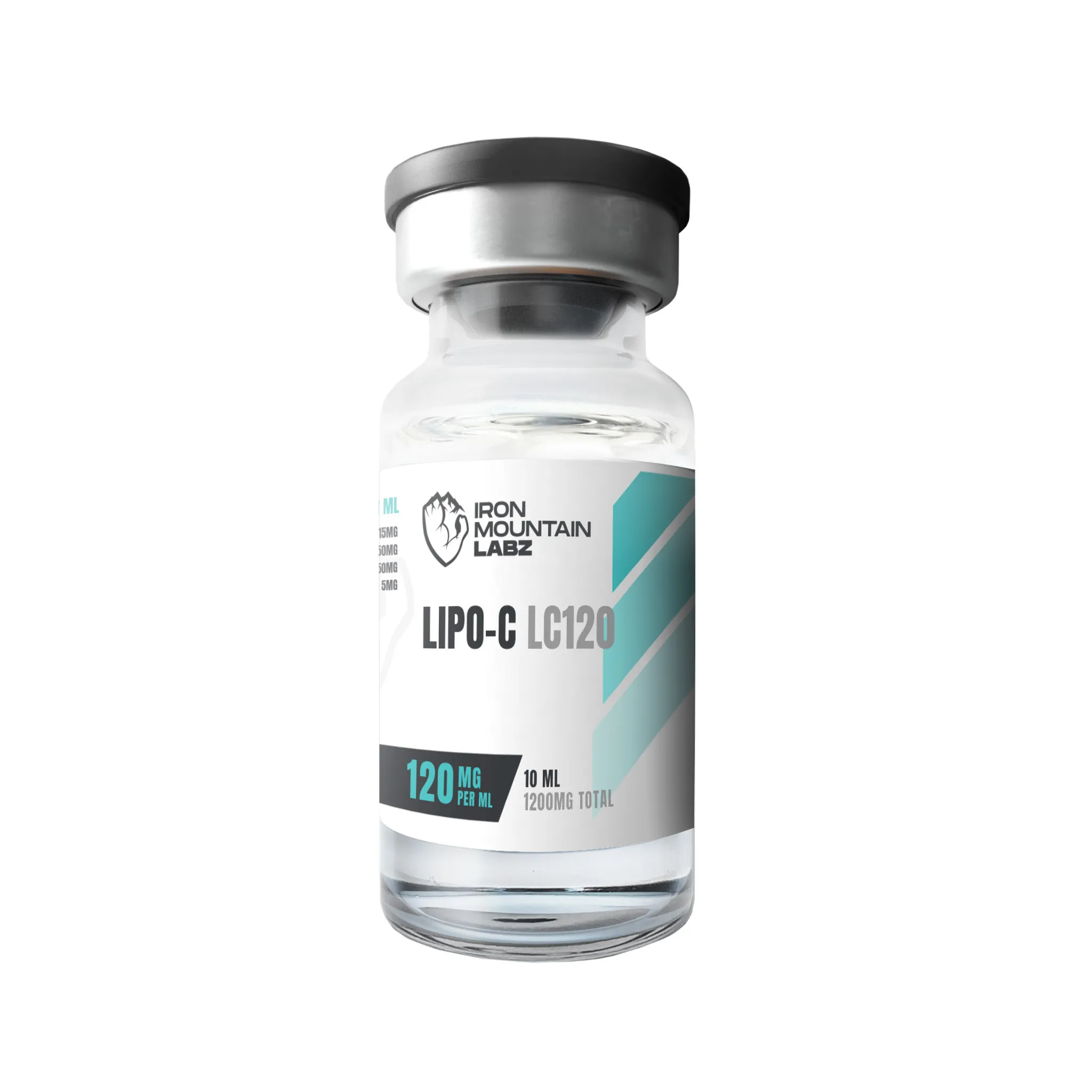
Four compounds co-blended in a 10ml vial (120mg total, catalog code LC120): Methionine 15mg, Choline Chloride 50mg, Carnitine 50mg, and Dexpanthenol 5mg. This exact four-way ratio has not been independently studied as a single formulation. Research Use Only; not FDA-approved; not for human or veterinary use. Requires IRB approval for human-subject research and IACUC approval for animal studies.
Methionine
An essential, sulfur-containing amino acid and methyl-donor precursor. Not a SARM.
Methionine Chemical Properties
| Property | Details |
| CAS Number | 63-68-3 |
| Compound Type | Essential sulfur-containing amino acid |
| Classification NOT a SARM | No androgen receptor activity |
| Molecular Weight | ~149.21 g/mol |
| Chemical Formula | C5H11NO2S |
| Synonyms | Met, L-Met |
| PubChem Reference | CID 6137 |
| Physical Form | Liquid/powder (as supplied in blend) |
| Purity | Verify per Certificate of Analysis |
| Storage | Cool, dry place; protect from moisture and light |
| Shelf Life | Verify per Certificate of Analysis |
| Regulatory Status | Research Use Only (RUO); not FDA-approved for this product |
Choline Chloride
A chloride salt of choline, an essential nutrient and precursor for phospholipids and the neurotransmitter acetylcholine. Not a SARM.
Choline Chloride Chemical Properties
| Property | Details |
| CAS Number | 67-48-1 |
| Compound Type | Choline salt, phospholipid/acetylcholine precursor |
| Classification NOT a SARM | No androgen receptor activity |
| Molecular Weight | ~139.62 g/mol |
| Chemical Formula | C5H14ClNO |
| Synonyms | Choline Chloride |
| PubChem Reference | CID 305 |
| Physical Form | Liquid/powder (as supplied in blend) |
| Purity | Verify per Certificate of Analysis |
| Storage | Cool, dry place; protect from moisture and light |
| Shelf Life | Verify per Certificate of Analysis |
| Regulatory Status | Research Use Only (RUO); not FDA-approved for this product |
Carnitine
A quaternary ammonium compound involved in fatty-acid transport into mitochondria. Not a SARM.
Carnitine Chemical Properties
| Property | Details |
| CAS Number | 541-15-1 |
| Compound Type | Mitochondrial fatty-acid transport compound |
| Classification NOT a SARM | No androgen receptor activity |
| Molecular Weight | ~161.20 g/mol |
| Chemical Formula | C7H15NO3 |
| Synonyms | Levocarnitine, L-Carnitine |
| PubChem Reference | CID 288 |
| Physical Form | Liquid/powder (as supplied in blend) |
| Purity | Verify per Certificate of Analysis |
| Storage | Cool, dry place; protect from moisture and light |
| Shelf Life | Verify per Certificate of Analysis |
| Regulatory Status | Research Use Only (RUO); not FDA-approved for this product |
Dexpanthenol
A stable alcohol analogue of pantothenic acid (vitamin B5), studied as a coenzyme A precursor. Not a SARM.
Dexpanthenol Chemical Properties
| Property | Details |
| CAS Number | 81-13-0 |
| Compound Type | Pantothenic acid (vitamin B5) alcohol analogue |
| Classification NOT a SARM | No androgen receptor activity |
| Molecular Weight | ~205.25 g/mol |
| Chemical Formula | C9H19NO4 |
| Synonyms | D-Panthenol, Provitamin B5 |
| PubChem Reference | CID 4678 |
| Physical Form | Liquid/powder (as supplied in blend) |
| Purity | Verify per Certificate of Analysis |
| Storage | Cool, dry place; protect from moisture and light |
| Shelf Life | Verify per Certificate of Analysis |
| Regulatory Status | Research Use Only (RUO); not FDA-approved for this product |
How Lipo-C (LC120) Works in Research Models
Methionine and Choline Chloride are studied together as classic “lipotropic” agents linked to liver fat metabolism. Carnitine is studied for transporting fatty acids into mitochondria for energy production. Dexpanthenol converts to pantothenic acid in the body, a component of coenzyme A involved in fatty-acid and energy metabolism. This specific four-ingredient ratio has not itself been studied as a combined formulation.
Risk & Handling
- Handle with gloves and eye protection; avoid contact with skin and eyes.
- Keep refrigerated or in a cool, dry place away from light and moisture.
- Only trained lab personnel should prepare or dose this product.
Why Consider Lipo-C for Research?
- Verified purity Tested per Certificate of Analysis (CoA)
- Identity verified HPLC analysis per lot
- Complete documentation Full CoA available on request
- Expert assistance Technical questions and compliance guidance
- Contact: help@ironmountainlabz.com
Frequently Asked Questions
Q1: What’s actually inside this bottle?
Four things: Methionine, Choline Chloride, Carnitine, and Dexpanthenol, totaling 120mg in a 10ml vial. Each one is listed with its own exact amount on the label.
Q2: Is there any science behind mixing these four together?
Methionine and Choline Chloride have been paired in research for a long time, and Carnitine and Dexpanthenol each have solid research on their own but nobody has published a study on this exact four-way combination and these exact amounts. Rely on this batch’s own Certificate of Analysis for purity details.
Q3: What do people usually study these ingredients for?
Mostly things tied to how the body processes fat, moves fatty acids around for energy, and builds coenzyme A. That’s just describing the science on each ingredient by itself, not making a claim about this exact product.
Q4: Who’s actually allowed to purchase this?
Only researchers at licensed institutions. Any research on people or animals has to have the right approvals lined up beforehand. It’s not made or sold for personal use.
Q5: Where and how should this be kept?
In the fridge, or somewhere cool, dry, and shaded from light. Use gloves and eye protection any time you’re handling it.
References
-
- Zeisel SH, da Costa KA. Choline: an essential nutrient for public health. Nutr Rev. 2009;67(11):615-623. PMID: 19906248. https://pubmed.ncbi.nlm.nih.gov/19906248/
- Stephens FB, Constantin-Teodosiu D, Greenhaff PL. New insights concerning the role of carnitine in the regulation of fuel metabolism in skeletal muscle. J Physiol. 2007;581(Pt 2):431-444. PMID: 17331998. https://pubmed.ncbi.nlm.nih.gov/17331998/
- Proksch E, de Bony R, Trapp S, Boudon S. Topical use of dexpanthenol in skin disorders. Am J Clin Dermatol. 2002;3(11):771-788. PMID: 12113650. https://pubmed.ncbi.nlm.nih.gov/12113650/
IML Affiliate Disclosure
Some links on IML may connect readers with third-party suppliers through affiliate arrangements. IML may receive compensation from qualifying transactions at no additional cost to the reader, but the third-party supplier remains responsible for the actual sale, fulfillment, and product documentation.