

Description
Adamax Peptide 5mg Research Overview
Disclaimer: The compounds described on this page are intended for laboratory research use only and are not approved for human consumption.
Overview of Adamax
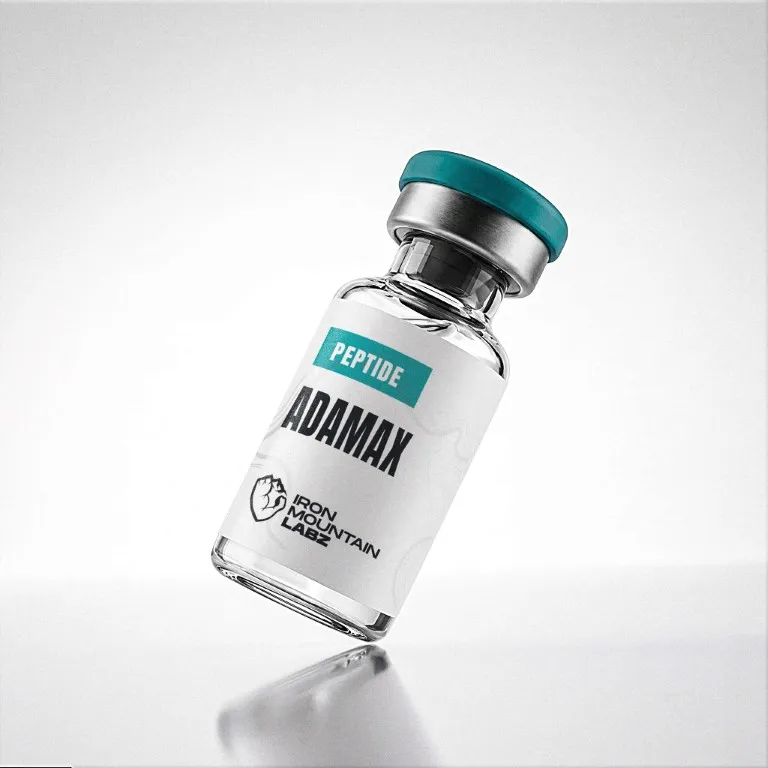
Adamax is a synthetic peptide marketed as a structurally modified derivative of Semax (an adrenocorticotropic hormone fragment analogue), supplied as a 5mg lyophilized powder (catalog code ADMX-5). Its defining feature is a claimed adamantane modification intended to increase lipophilicity and blood-brain-barrier penetration relative to Semax.
Identity Caveat (Important): Unlike most compounds on this site, Adamax does not have a single, independently verifiable chemical identity. No PubChem CID or registered CAS number is publicly documented for it. Vendor listings disagree on the exact amino acid sequence reported variously as Ac-MEHFPGPAG-NH2, Ac-MEHFPGP-AG-NH2, and Ac-MEHFPGP-Ad-NH2 (“provisional, pending full disclosure” per one source) and molecular weight estimates vary by vendor (commonly cited as approximately 1,100–1,300 g/mol, “depending on adamantyl configuration”). This means “Adamax” as sold may not refer to one single, consistent molecule across suppliers. Treat any specific structural or purity claim as unverified until confirmed against this lot’s own Certificate of Analysis and independent mass spectrometry.
Adamax
Adamax is described by vendors as a hexapeptide or heptapeptide analogue of Semax, with an adamantane group (a rigid, lipophilic hydrocarbon cage structure) added to enhance membrane permeability and enzymatic stability relative to unmodified Semax. It is not a SARM and has no androgen receptor activity, but its structural identity is not independently confirmed the way most peptides on this site are.
Adamax Chemical Properties
| Section | Details |
| CAS Number | Not publicly documented; not independently verified |
| PubChem CID | Not available |
| Molar Mass | Reported ~1,100–1,300 g/mol (vendor estimate; varies by source) |
| Chemical Formula | Not consistently reported across sources |
| Sequence | Disputed reported variously as Ac-MEHFPGPAG-NH2 or with an adamantyl (Ad) substitution; not confirmed |
| Compound Type | Claimed Semax analogue with adamantane modification |
| Classification NOT a SARM | No androgen receptor activity |
| Physical Form | Lyophilized powder |
| Purity | Verify per Certificate of Analysis |
| Storage | -20°C; protect from light and moisture |
| Shelf Life | Verify per Certificate of Analysis |
| Regulatory Status | Unregulated research chemical; not FDA-approved; not evaluated for safety or identity by any recognized authority |
| WADA Status | Not listed; peptide-class compounds affecting CNS/neuroendocrine signaling should still be avoided by tested athletes as a precaution |
| Compound’s Disclaimer | Not evaluated by the FDA. Structural identity not independently confirmed. For laboratory research use by qualified personnel only. |
Adamax’s Proposed Mechanism of Action
Vendor literature proposes that Adamax, like Semax, may influence BDNF and NGF gene expression and interact with neurotrophin signaling pathways, with the added adamantane group proposed to improve blood-brain-barrier penetration and metabolic stability compared to Semax. No independently published, peer-reviewed study on Adamax itself was identified; all mechanism claims trace back to inference from Semax’s known pharmacology and vendor-authored material, not direct experimental data on Adamax.
Risk & Handling
- Handle with gloves and eye protection; avoid inhaling powder during weighing or reconstitution.
- Keep frozen (-20°C) and protected from light and moisture until needed.
- Given the unverified identity of this compound, independent identity/purity testing is strongly advised before any experimental use.
Why Consider Adamax for Research?
- Certificate of Analysis available on request per lot, reflecting this specific batch’s testing.
- Identity and purity should be independently verified given the lack of a public reference standard.
- Expert assistance technical questions and compliance guidance.
- Contact: help@ironmountainlabz.com
Frequently Asked Questions
Is Adamax a real, independently verified compound?
Not in the way most research peptides are. There’s no public PubChem entry or registered CAS number for it, and different vendors describe its structure differently. It’s best understood as a marketed Semax-derivative concept rather than a single, well-characterized molecule so treat structural claims with caution.
Is this legal to buy in the US?
It’s sold as an unregulated research chemical, not an FDA-approved drug legal to purchase for laboratory research, but not intended for human or animal use, and not backed by the kind of regulatory or chemical-database verification most peptides have.
What is Adamax supposed to do, based on the marketing?
Vendors claim it works like Semax (a peptide studied for effects on BDNF and neurotrophin signaling) but with better brain penetration, thanks to an added chemical group. None of this has been confirmed in an independent, published study specific to Adamax itself.
Should I be concerned about buying something without a confirmed chemical identity?
Yes, that’s a legitimate concern. Without a public reference standard, you’re relying entirely on the seller’s own testing. If you’re planning any research use, independent mass spectrometry verification of identity and purity is strongly recommended before relying on vendor claims.
How should this be stored and handled?
Keep it frozen (-20°C), away from light and moisture. Use gloves and eye protection when handling, and avoid inhaling the powder during weighing or reconstitution.
References
- National Center for Biotechnology Information (NCBI). PubChem Compound Database. National Library of Medicine. https://pubchem.ncbi.nlm.nih.gov (searched; no verified Adamax entry found)
- Fosgerau K, Hoffmann T. Peptide therapeutics: current status and future directions. Drug Discov Today. 2015;20(1):122-128. PMID: 25450771. https://pubmed.ncbi.nlm.nih.gov/25450771/
- Lau JL, Dunn MK. Therapeutic peptides: Historical perspectives and future directions. Bioorg Med Chem. 2018;26(10):2700-2707. PMID: 29307418. https://pubmed.ncbi.nlm.nih.gov/29307418/
IML Affiliate Disclosure
Some links on IML may connect readers with third-party suppliers through affiliate arrangements. IML may receive compensation from qualifying transactions at no additional cost to the reader, but the third-party supplier remains responsible for the actual sale, fulfillment, and product documentation.