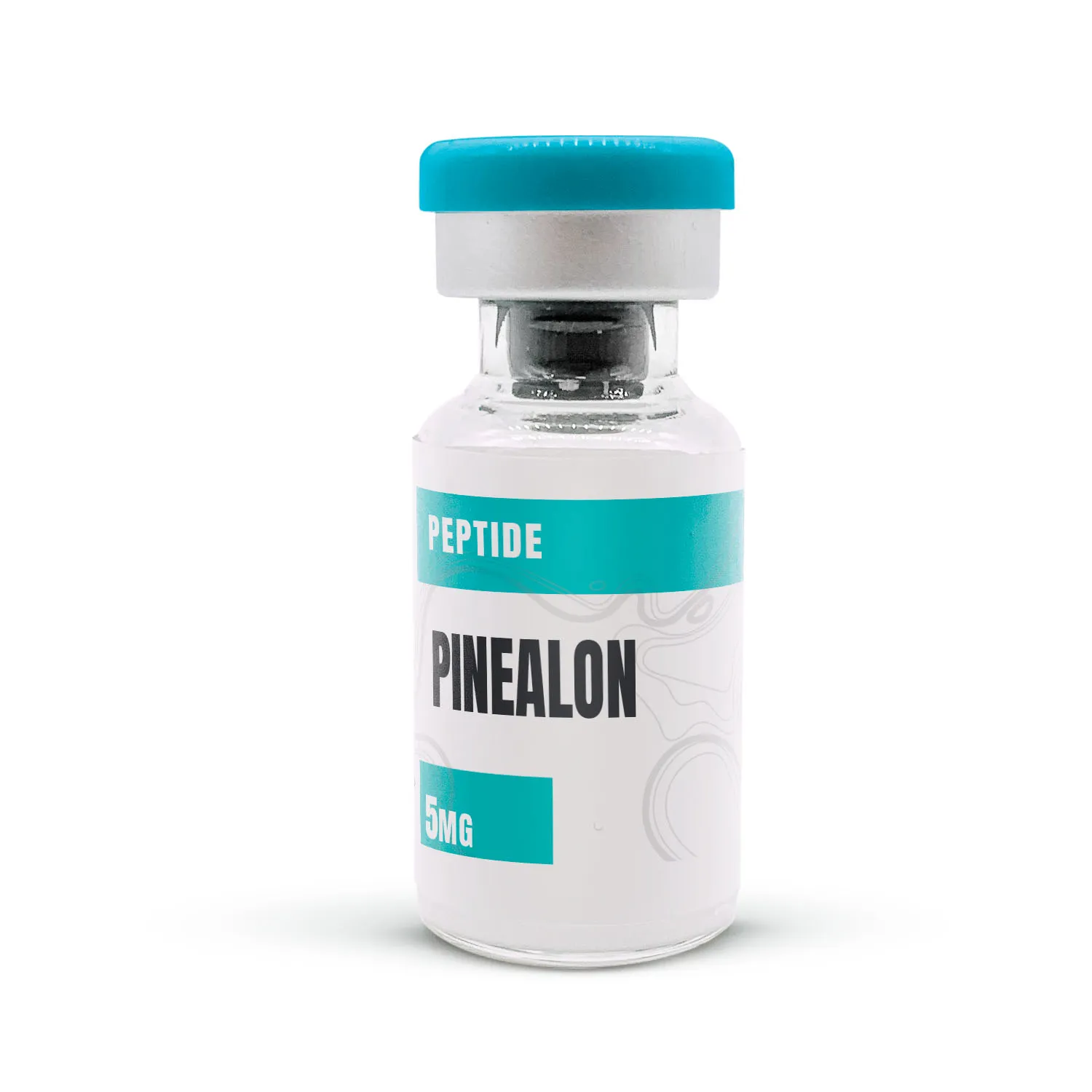


Description
Pinealon (EDR Peptide) Research Overview
Disclaimer: The compounds described on this page are intended for laboratory research use only and are not approved for human consumption.
Overview of Pinealon
Pinealon is a synthetic tripeptide supplied as a lyophilized powder, available in 5mg and 10mg fill sizes (catalog codes PIN-5 and PIN-10). Also known as the EDR peptide (Glu-Asp-Arg), it is one of several ultra-short “bioregulator” peptides developed by Russian researcher Vladimir Khavinson and colleagues, originally studied in connection with pineal gland and central nervous system function. It is not an FDA-approved drug, not a prescription pharmaceutical, and not a dietary supplement. Most of the published research on Pinealon comes from the originating Russian research group and their collaborators; independent replication outside that network is limited.
Regulatory Note (July 2026): Pinealon has not been evaluated or approved by the FDA for any use, and it is not part of the FDA 503A Category/PCAC compounding review process that applies to peptides like BPC-157 or TB-500 it is sold strictly as an uncompounded research chemical. It also does not appear on the 2026 WADA Prohibited List; it is not a peptide hormone, growth factor, or GH secretagogue, so it does not fall under any WADA S2 category.
Available Fill Sizes
| Fill Size | Catalog Code | Format | Best Suited For |
| 5mg | PIN-5 | Lyophilized powder, single vial | Standard research batches, single-session use |
| 10mg | PIN-10 | Lyophilized powder, single vial | Multi-session research use, larger batch dosing |
Pinealon (EDR Peptide)
Pinealon is a tripeptide composed of L-glutamic acid, L-aspartic acid, and L-arginine (Glu-Asp-Arg), notably smaller than most research peptides. Unlike receptor-binding peptides, Pinealon is proposed in the originating literature to cross cell and nuclear membranes directly and interact with DNA/histone proteins to influence gene expression, rather than acting through a surface receptor. The chemical identity is the same across both fill sizes below only the quantity per vial differs. Not a SARM; not a peptide hormone or growth factor.
Pinealon Chemical Properties
| Section | Details |
| CAS Number | 175175-23-2 |
| PubChem CID | 10273502 |
| Molar Mass | ~418.41 g/mol |
| Chemical Formula | C15H26N6O8 |
| Sequence | H-Glu-Asp-Arg-OH |
| Synonyms | EDR Peptide, T-33 Peptide, Glutamylaspartylarginine |
| Chemical Class | Synthetic ultra-short tripeptide bioregulator |
| Physical Form | Lyophilized powder |
| Purity | Verify per Certificate of Analysis |
| Storage | -20°C; protect from light and moisture |
| Shelf Life | Verify per Certificate of Analysis |
| Regulatory Status | Research chemical; not FDA-approved; not a prescription drug or supplement |
| FDA 503A/PCAC Status | Not applicable not a nominated or compounded bulk drug substance |
| WADA Status | Not listed does not fall under any WADA S2 category (not a peptide hormone or growth factor) |
| Compound’s Disclaimer | Not evaluated by the FDA. Not intended to diagnose, treat, cure, or prevent any disease. For laboratory research use by qualified personnel only. |
Pinealon’s Mechanism of Action
Pinealon is studied for its small size (three amino acids), which the originating research group proposes allows it to enter cells and the nucleus without requiring a surface receptor, potentially interacting with chromatin and influencing the expression of genes tied to neuronal function, oxidative stress response, and apoptosis regulation. Reported effects in the Russian literature include neuroprotective activity in rodent models of hyperhomocysteinemia and diabetes-related cognitive decline. This proposed mechanism is largely specific to the originating research group and has not been broadly independently replicated.
Risk & Handling
- Handle with gloves and eye protection; avoid inhaling powder during weighing or reconstitution.
- Keep frozen (-20°C) and protected from light and moisture until needed.
- Only trained personnel should prepare or dose this product.
Why Consider Pinealon for Research?
- Purity confirmed per lot, with method specified on Certificate of Analysis.
- Identity confirmed per lot; structural data available on COA.
- Certificate of Analysis available on request per lot.
- Available in 5mg and 10mg fill sizes to suit different research needs.
- Contact: help@ironmountainlabz.com
Frequently Asked Questions
What is the regulatory status of Pinealon?
Yes, as a research chemical it’s not FDA-approved as a drug or supplement, so it’s sold for laboratory research use, not as a finished consumer product.
Q2: What’s the difference between the 5mg and 10mg vials?
Nothing chemically same peptide, same purity standard, same identity. The 10mg size simply gives twice the quantity per vial, which is more convenient for researchers running multiple sessions without reordering as often.
Q3: Is there solid science behind Pinealon, or is it mostly overseas marketing?
There’s a real body of published research, but almost all of it comes from one Russian research group (led by Vladimir Khavinson) and their collaborators. Independent labs outside that network haven’t widely replicated the findings, so treat the more specific claims with some caution.
Q4: What is Pinealon generally studied for?
Mostly neuroprotection and gene-expression research how this very small peptide might influence brain-cell survival and function, based on animal studies rather than large human clinical trials.
Q5: How should this be stored and handled?
Keep it frozen (-20°C), away from light and moisture. Use gloves and eye protection when handling, and avoid inhaling the powder during weighing or reconstitution.
References
- National Center for Biotechnology Information (NCBI). Glu-Asp-Arg, PubChem CID 10273502. National Institutes of Health. https://pubchem.ncbi.nlm.nih.gov/compound/Glu-Asp-Arg
- Khavinson V, Linkova N, Kozhevnikova E, Trofimova S. EDR Peptide: Possible Mechanism of Gene Expression and Protein Synthesis Regulation Involved in the Pathogenesis of Alzheimer’s Disease. Molecules. 2021;26(1):159. PubMed Central: PMC7795577. https://pmc.ncbi.nlm.nih.gov/articles/PMC7795577/
- Arutjunyan A, Kozina L, Stvolinskiy S, Bulygina Y, Mashkina A, Khavinson V. Pinealon protects the rat offspring from prenatal hyperhomocysteinemia. Int J Clin Exp Med. 2012;5(2):179-185. PMID: 22567179. https://pubmed.ncbi.nlm.nih.gov/22567179/
IML Affiliate Disclosure
Some links on IML may connect readers with third-party suppliers through affiliate arrangements. IML may receive compensation from qualifying transactions at no additional cost to the reader, but the third-party supplier remains responsible for the actual sale, fulfillment, and product documentation.