

Description
Disclaimer: The compounds described on this page are intended for laboratory research use only and are not approved for human consumption.
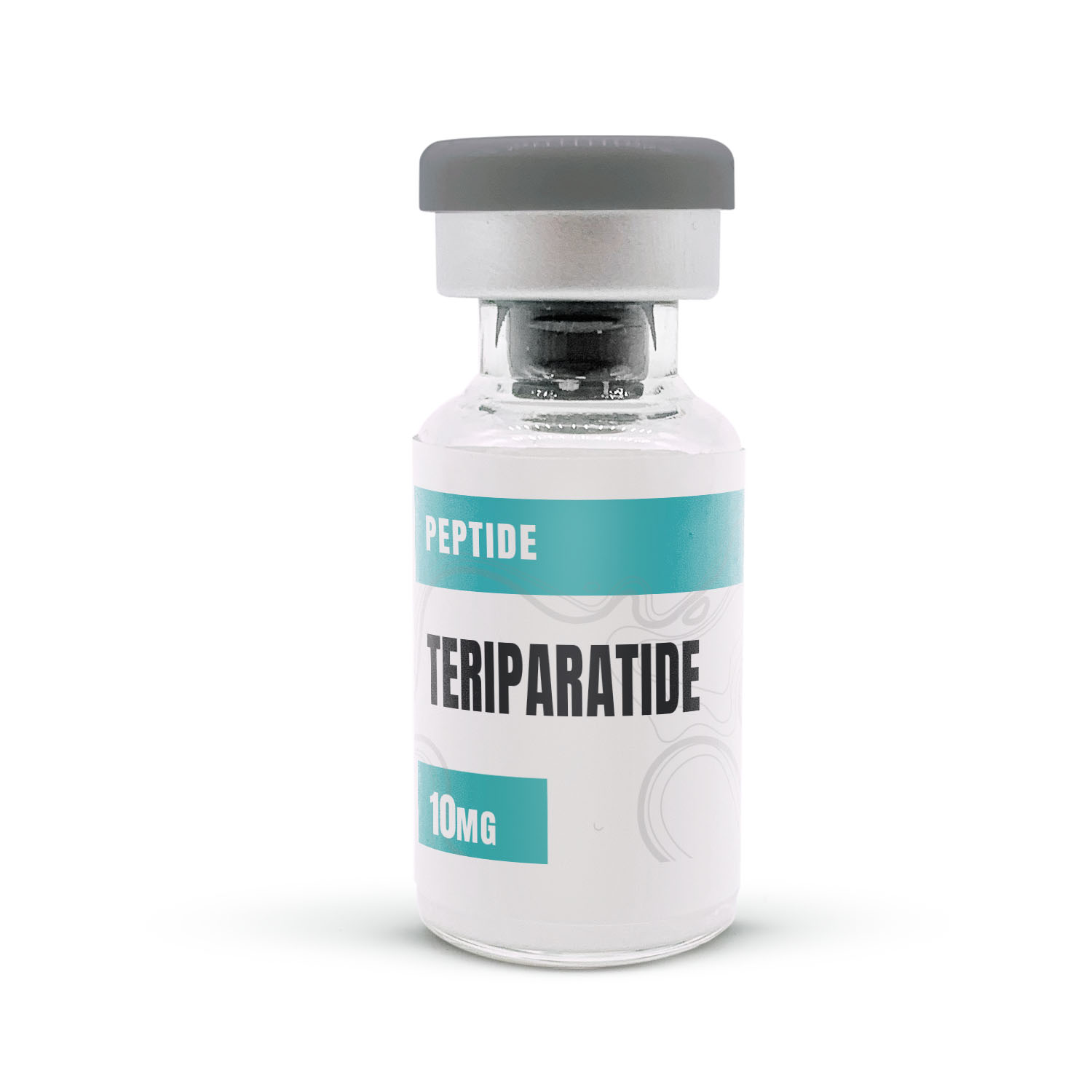
Overview of Teriparatide (PTH 1-34) 10mg
Teriparatide is a synthetic 34-amino-acid peptide corresponding to the N-terminal fragment of parathyroid hormone (PTH). It is classified as a parathyroid hormone receptor 1 (PTH1R) agonist. It is listed by third-party vendors as a research-grade lyophilized peptide in vials. In preclinical bone remodeling research, it has been investigated for its interactions with PTH1R, a G protein-coupled receptor expressed in
- Osteoblasts,
- Renal tubular cells, and
- Various other tissue types in animal models
A pharmaceutical formulation of teriparatide is FDA-approved for specific clinical indications under medical supervision. The research-grade preparation supplied here is a distinct laboratory compound. It is a 10mg lyophilized peptide vial produced for preclinical and in vitro research use only. It is not a pharmaceutical product, not a clinical preparation, and is not supplied for any human application. It is not a dietary supplement.
Teriparatide (PTH 1-34) 10mg may be used in the following research applications:
- In vitro PTH1R receptor binding investigation
- Preclinical bone remodeling pathway research
- Osteoblast biology laboratory studies
Chemical Properties
| Section | Details |
| CAS Number | 52232-67-4 |
| Molar Mass | 4,117.72 g/mol |
| Chemical Formula | C₁₈₁H₂₉₁N₅₅O₅₁S₂ |
| PubChem CID | 16133850 |
| IUPAC Name | H-Tyr-Ala-Asp-Ala-Ile-Phe-Thr-Asn-Ser-Tyr-Arg-Lys-Val-Leu-Gly-Gln-Leu-Ser-Ala-Arg-Lys-Leu-Leu-Gln-Asp-Ile-Met-Ser-Arg-Gln-Gln-Gly-Glu-Ser-Asn-Gln-Glu-Arg-Gly-Ala-Arg-Ala-Arg-Leu-NH₂ |
| Synonyms | PTH 1-34, Parathyroid Hormone Fragment 1-34, hPTH(1-34) |
| Format | 10mg Lyophilized Vial |
| Ingredients / Composition | Teriparatide (PTH 1-34), ≥98% purity (HPLC verified) |
| Physical Form | White to off-white lyophilized powder |
| Solubility | Soluble in sterile water or acetic acid solution; limited solubility in organic solvents |
| Shelf Life | Up to 24 months when stored under recommended conditions in lyophilized form |
| Storage Instructions | Store at −20°C, protected from light and moisture. Avoid repeated freeze-thaw cycles. Use within one month once opened. |
| Disclaimer | A pharmaceutical formulation of teriparatide is FDA-approved for specific clinical indications. This research-grade vial preparation is a distinct laboratory compound not approved for human or veterinary use. |
| Classification | Research Use Only (RUO) |
Formulation note: The acetate salt form (CAS 99294-94-7, MW 4,177.83 g/mol) is also available from some suppliers. The values above reflect the free peptide entry for CAS 52232-67-4. Researchers should confirm the specific form of the material in use, as the two variants differ in molecular weight and may affect experimental design.
Teriparatide (PTH 1-34)’ Mechanism of Action in Research Models
PTH1R Receptor Binding and cAMP Signaling Research:
Teriparatide has been investigated in preclinical cell and tissue models as a PTH1R agonist. In isolated receptor preparations and cell culture systems, PTH1R binding by teriparatide has been observed to activate adenylate cyclase, increasing intracellular cAMP levels and activating downstream protein kinase A signaling cascades. This receptor-mediated second messenger pathway is the primary mechanism under investigation in PTH1R pharmacology research.
Osteoblast Activation and Bone Formation Pathway Research:
Research in this area has investigated how PTH1R signaling may shift the balance between bone-forming and bone-resorbing cellular activity in experimental model systems.
RANKL/OPG Pathway Modulation Research:
In animal model studies, teriparatide has been investigated for its potential to modulate RANKL (receptor activator of nuclear factor kappa-B ligand) and osteoprotegerin (OPG) signaling. The interaction between PTH1R activation and the RANKL/OPG axis in bone remodeling model systems remains an active area of preclinical investigation.
Bone Remodeling Marker Research:
In preclinical bone remodeling model systems, teriparatide administration has been observed to modulate serum markers of bone formation and resorption, including osteocalcin and CTX-1, in a dose and frequency-dependent manner. This has made it a reference compound in preclinical studies investigating bone remodeling dynamics.
Risk & Handling
Teriparatide is a synthetic polypeptide PTH1R agonist under investigation in preclinical bone remodeling research.
Risk tier: HIGH.
This rating reflects teriparatide’s potent endocrine activity on calcium homeostasis pathways, the bioactive concentrations used in preclinical research, and the need for strict handling protocols to prevent accidental exposure during reconstitution.
Researchers must observe:
Handling Precautions: Teriparatide should be handled exclusively in a controlled laboratory environment by trained personnel. Avoid skin and eye contact during reconstitution and handling. Use appropriate PPE at all times.
Exposure Risks: Teriparatide is a PTH1R agonist research peptide that is thought to modulate calcium homeostasis, cAMP signaling, and bone remodeling pathways in preclinical models. No human safety data has been established for the research-grade formulation supplied here.
Storage: Store lyophilized teriparatide at −20°C in a dry, dark environment. Protect from light, heat, and moisture at all times. Avoid repeated freeze-thaw cycles.
Why Consider Teriparatide (PTH 1-34) for Research?
Researchers may consider Teriparatide (PTH 1-34) based on its intended research application, available specifications, and supporting documentation.
- Purity of Teriparatide (PTH 1-34) verified at ≥98% (by HPLC per product specification)
- Physical form confirmed as white to off-white lyophilized powder
- Supplied as a 10mg lyophilized vial (fit for preclinical and in vitro laboratory use)
- Formulation note included with each batch
For queries, complaints, or support, please contact help@ironmountainlabz.com
Frequently Asked Questions
Is Teriparatide (PTH 1-34) legal in the United States?
The research-grade vial preparation supplied here is a distinct laboratory compound. It is not approved for other conditions and is available for research purposes only in the United States.
What is Teriparatide (PTH 1-34) used for in research models?
In controlled laboratory environments, teriparatide vials have been investigated for:
- PTH1R receptor binding kinetics and structure-activity relationship studies,
- Osteoblast differentiation and apoptosis pathway investigation
- RANKL/OPG signaling axis research,
- Comparative PTH fragment pharmacology studies against full-length PTH(1-84) analogs, and
- Bone remodeling marker modulation studies in rodent preclinical models
How should Teriparatide (PTH 1-34) be stored?
Store vials at −20°C in a dry, dark environment, protected from light, heat, and moisture. Avoid repeated freeze-thaw cycles, as these may degrade peptide integrity and reduce receptor-binding activity.
What formulation variants of teriparatide exist for research purposes?
Teriparatide is commercially available in both free peptide form (CAS 52232-67-4, MW 4,117.72 g/mol) and acetate salt form (CAS 99294-94-7, MW 4,177.83 g/mol). Researchers should confirm the specific form of the material in use, as the two variants differ in molecular weight and may affect experimental design. The linked vendor supplies the free peptide form.
References
Jilka, R. L. Molecular and cellular mechanisms of the anabolic effect of intermittent PTH. Bone. 2007;40(6):1434–1446. PMID: 17517365. https://pubmed.ncbi.nlm.nih.gov/17517365/
Jilka, R. L., Weinstein, R. S., Bellido, T., Roberson, P., Parfitt, A. M., & Manolagas, S. C. Increased bone formation by prevention of osteoblast apoptosis with parathyroid hormone. Journal of Clinical Investigation. 1999;104(4):439–446. PMID: 10449436. https://pubmed.ncbi.nlm.nih.gov/10449436/
IML Affiliate Disclosure
Some links on IML may connect readers with third-party suppliers through affiliate arrangements. IML may receive compensation from qualifying transactions at no additional cost to the reader, but the third-party supplier remains responsible for the actual sale, fulfillment, and product documentation.